
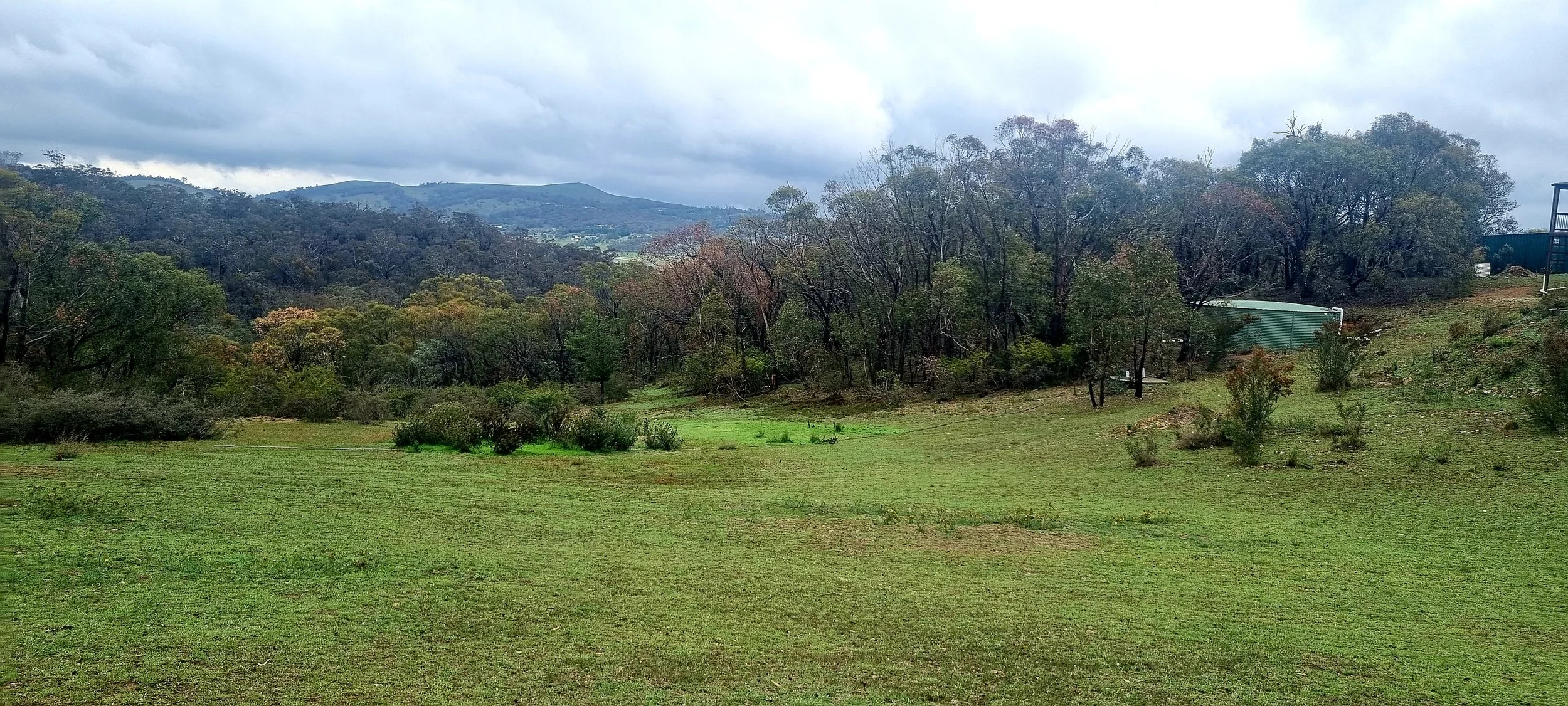
Welcome to March, the beginning of Autumn here in Canberra, possibly my favourite time of year. As I write, the sound of gentle rain has been pattering on my roof for several days now, renewing growth all around me,. The grass, or what was left of it, has turned from crisp, brown, practically dead litter crunching underfoot to lush green fodder for the kangaroos to graze upon again. My maples have already changed to red in preparation for the cooler climate and my granddaughter has spent several afternoons splashing in puddles that provoke excitement, joy and laughter in her and myself. I’ve watched with delight our water tank gradually refill almost back to the top and breathed a sigh of relief that we have made it through another long extremely hot season without the threat of a bushfire. I am hoping that the long hot days of this Summer are almost behind us. I know there are still a few hot days ahead, March can be fickle like that, but it’s good to be able to breathe again.
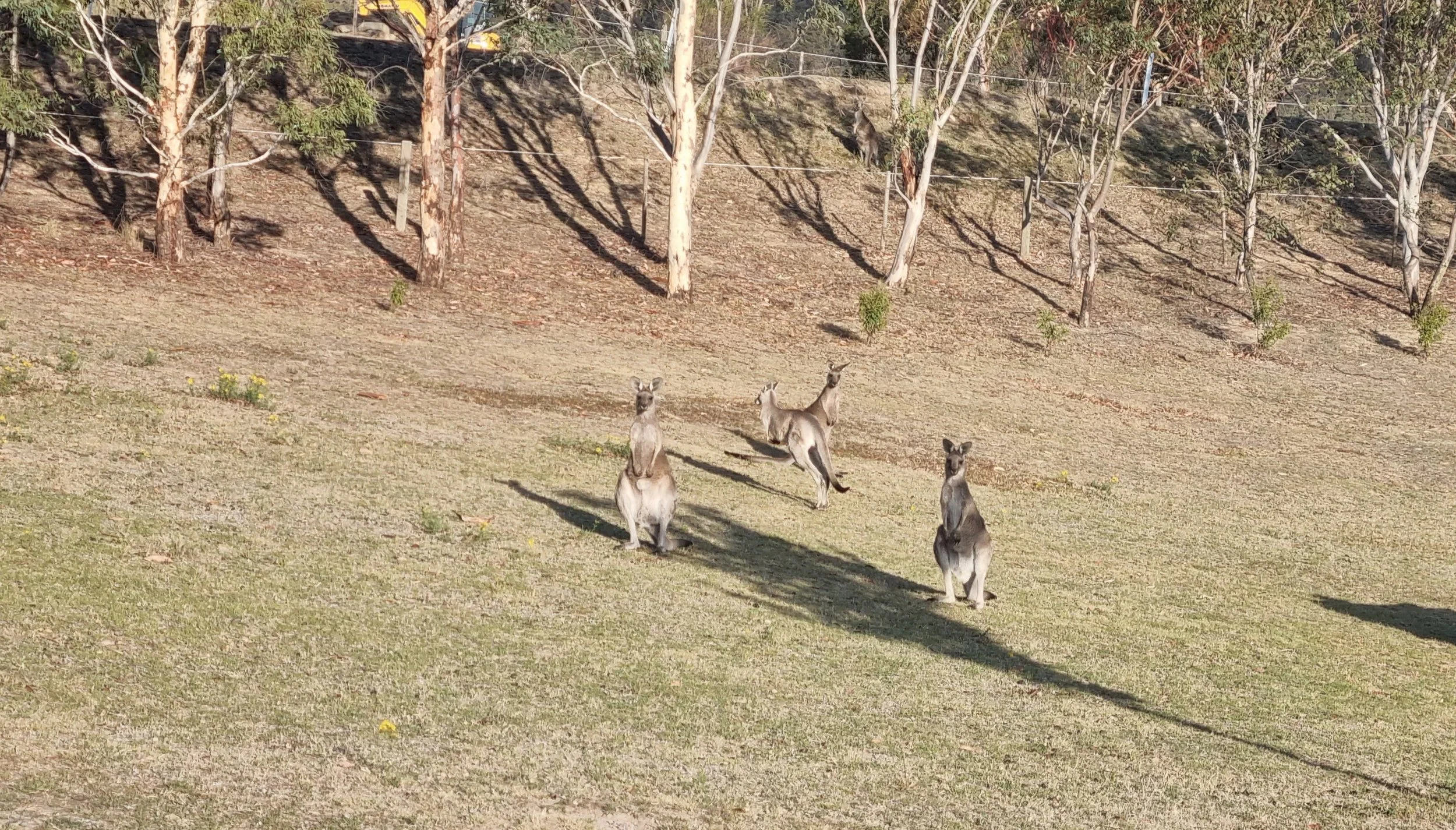
Before the rain. brown, dry, harsh ground, very little feed for the kangaroos.
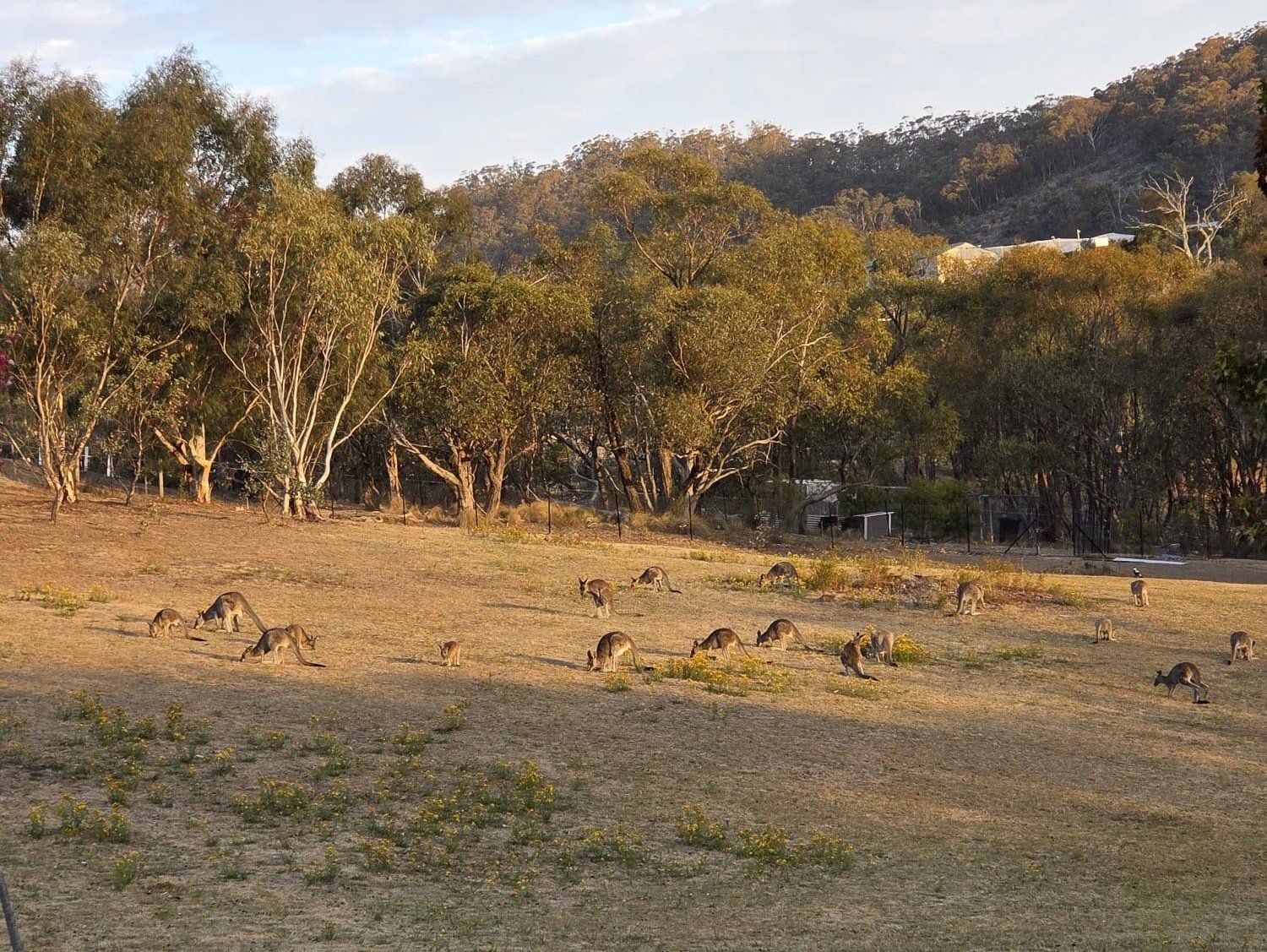
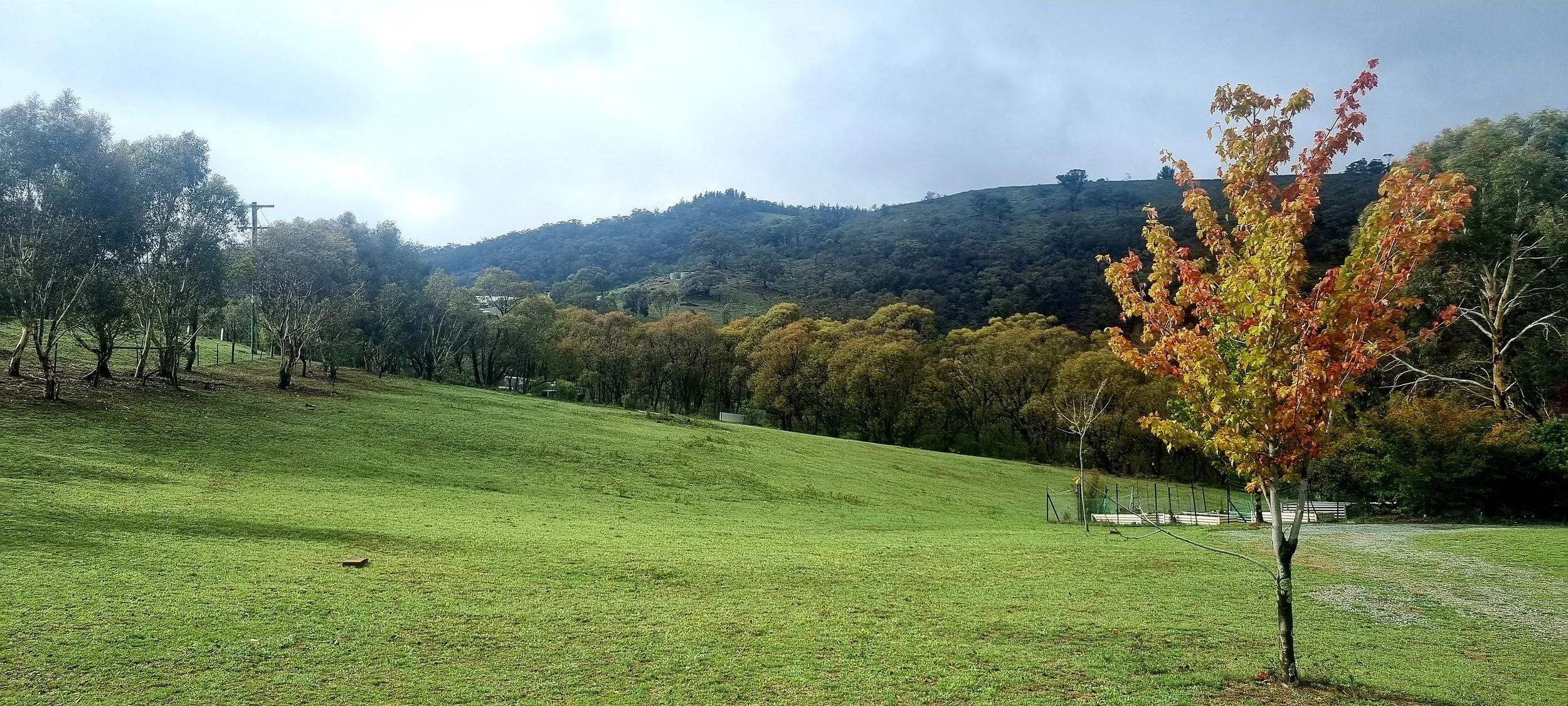
After the rain, lush green paddocks, a kangaroos and my delight.
What does all that have to do with the realities of self-publishing? March is the time I am able to consider sitting upstairs in my favourite room at my computer to seriously ponder writing. During Summer it is unbearable to spend any length of time up here. Plus all the family and friends that come to stay over the Summer months, for a ‘country holiday’ have departed and I can now contemplate where I plan to head in my writing journey this year.
My first thoughts come to planning my chat with a fellow self-publishing author at our upcoming SCBWI ACT conference at the end of this month. We have been given twenty minutes to impart our knowledge on this subject and hopefully help new authors decide whether the self=-publishing route is something they would like to pursue.
This afternoon I started jotting down a few questions I thought our audience might like answered and then realised that perhaps I should examine a few of my answers here.
One of the biggest realities of self-publishing if you want to do it right, is the commercial outlay. If you want your final product to look and be as professional as a traditionally published book, (and you should) there is much to consider.
Most of us can’t do it all ourselves. It’s one thing to write the story, but it is imperative that you pay for a good editor. Not just a proof reader, but someone who can do a structural edit, look for holes in your plot and help make your story the absolute best it can be. Regarding writing, it is worth considering paying for some writing courses too if you haven’t already done so. With AI becoming greater competition, you need to make your writing the absolute best it can be.
Then you need a great cover. Whether we like it or not, books do get judged by their cover. If your book doesn’t stand out in a crowded market, it will never be found. Don’t design the cover yourself unless you are a graphic designer. Someone who truly knows what they are doing is worth their weight in gold.
An accomplished formatter is essential too. Someone who can layout the book design with the right font, size and arrangement on the page to make your book look as polished as it should be.
If you have written a picture book or a junior fiction story that requires illustrations, and if you are not an illustrator yourself, then there is the added cost of finding someone who is proficient with illustrating and understands the nuances of the picture book industry. A good illustrator does not come cheap, but the correct illustrations can make or break your book. They need to be pictures that kids will love to look at over and over again just as much as they want to read your story. Illustrations need to engage your young reader just as much as the text.
Do you plan to make print copies of your book? Or ebook copies only? Naturally, ebooks are your cheapest option, but let’s be honest, we all love to hold that new book in our hands and feel we have accomplished something special. To print you have several choices, print-on-demand or find a local or overseas printer. Most people I know these days choose the print=on-demand option as it means you only need to order a minimal number of books at a time. A printer will require you to place an order anywhere from 500 to 1000 copies minimum. Then you have to store all those boxes somewhere and consider whether you might actually manage to sell them all.
That brings me to marketing. That perhaps needs a whole new blog post of its own. I think I will save that for next month.
All in all, self-publishing can be extremely rewarding, but be aware, you are taking the place of the traditional publisher and with that comes the reality of the full commercial endeavour and risk. Again you have several options. Find all the resources yourself, ie the editor, graphic designer, formatter , illustrator etc. This can be time consuming if you don’t know where to start. Lucky for me, I knew all the connections from the first two Adamson Adventures that were traditionally published, so when it came time to self-publish books 3 and 4, I was able to contact the same people and continue to keep the series all looking the same. This resulted in minimal costs, especially as the few illustrations that are in them I did myself. The result being I was able to cover my costs and even make a little return on my investment.
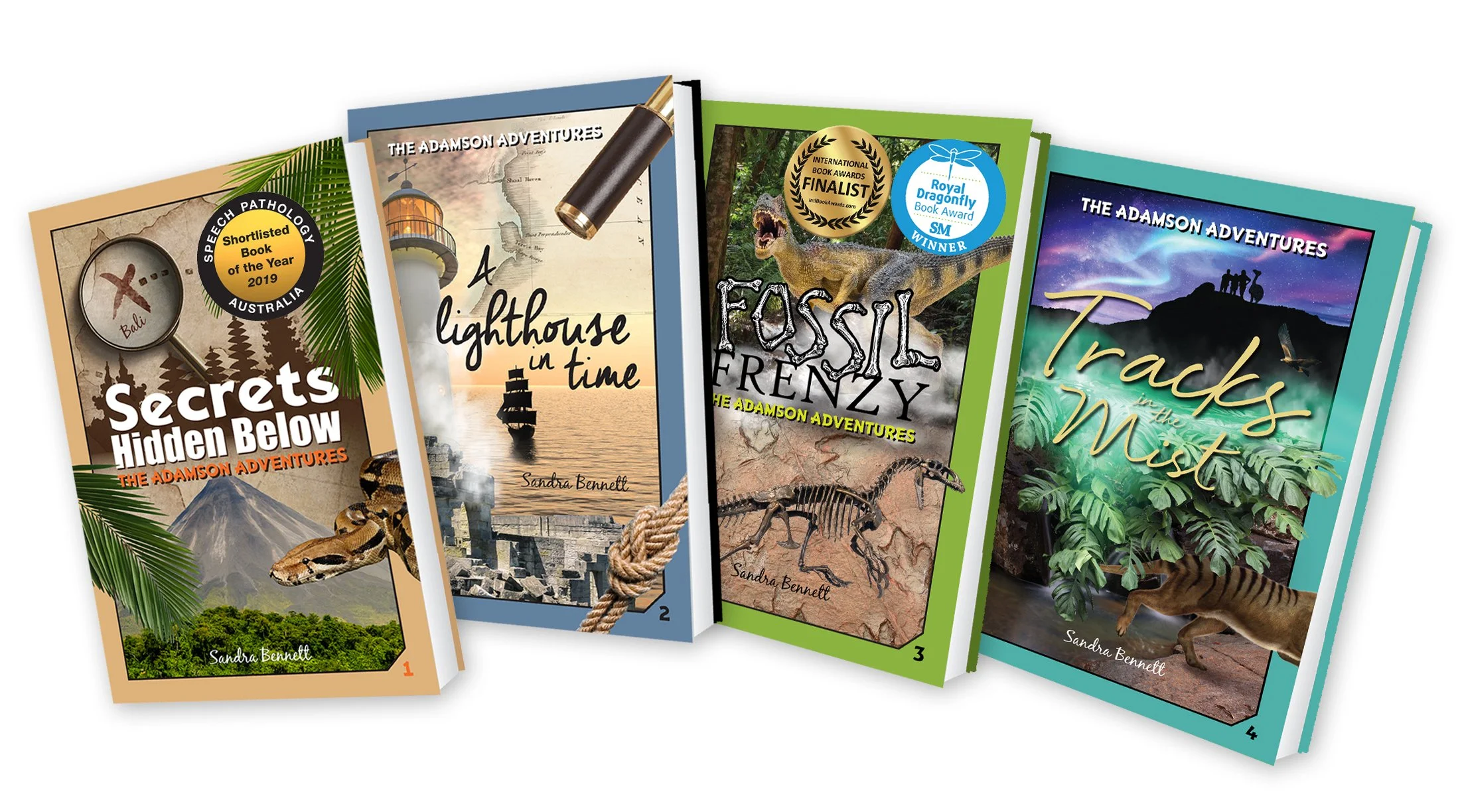
The Adamson Adventures, books 1 & 2 were traditionally published, books 3 & 4 were self published. Can you tell the difference?
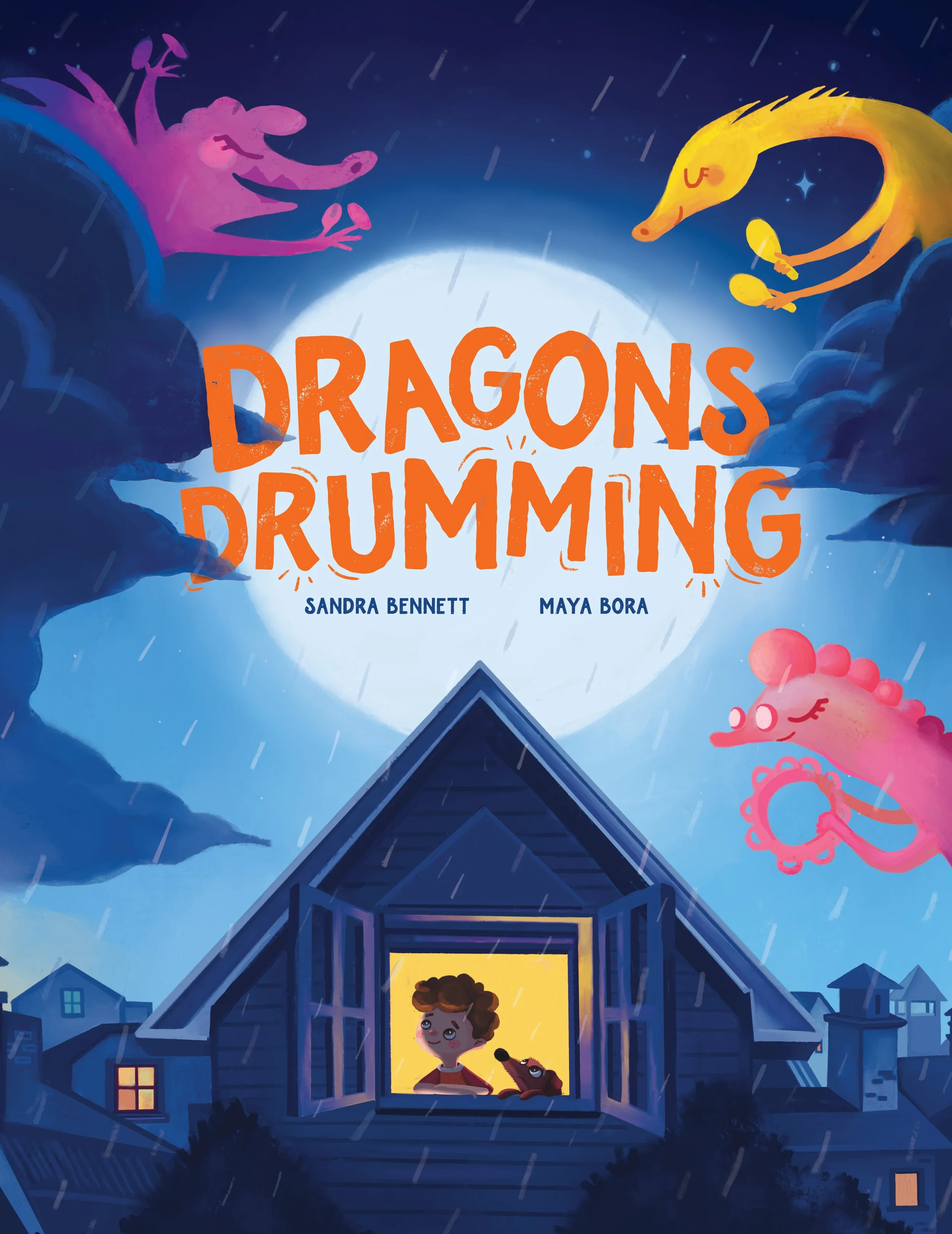
On the other hand, with Dragons Drumming, I was looking for a suitable illustrator and someone to help with the editing and design. I used a company that does everything in-house for you except the printing and marketing. That is all over to yourself. This meant I had in my hands a traditional and professionally published looking book baby, but the costs meant I would never be able to sell enough books to recover my initial investment. I knew this right from the beginning, but went ahead anyway because I wanted a picture book that I would be proud of, and I knew kids would love and return to reading time and time again.
In my earlier years of self-publishing, when I was still a bit naive, I went through what I now know was a self-publishing company that in the industry is termed a vanity publisher. You pay them to publish your book, but retain full copyright. They do all the editing, formatting, graphic design, find the illustrator if you don’t have anyone in mind, and even print the books for you. They might even say that marketing is included. Don’t be fooled, you’ll pay out quite a lot for little return. The quality is not usually as good either. Despite all this, with hard work and marketing I did manage to recover my costs.
The reality of self publishing is so much more than just writing a book. However, you retain full copyright and full control over how your finished product looks. You can control the timing of when your book is released, which is usually much faster than all the years waiting for a traditional publisher to accept your manuscript, before the then inevitable waiting before you finally see the finished book in your hands. Added bonus, with a traditional publisher you will receive no more than 5 to 10% royalties, (and that is only after the publisher has remade their initial investment in you), whereas self-publishing taking into account all your costs, you will receive a much higher percentage depending on whether you have a distributor, sell to book stores or sell directly to your customers.
More and more authors are choosing to take the self-publishing route, or even hybrid publishing whereby they have books both self and traditionally published.
Which do you prefer? Are you self-published or traditionally published?
Has this post helped you reach a choice?
Next month we’ll dive further into the realities of self publishing.